
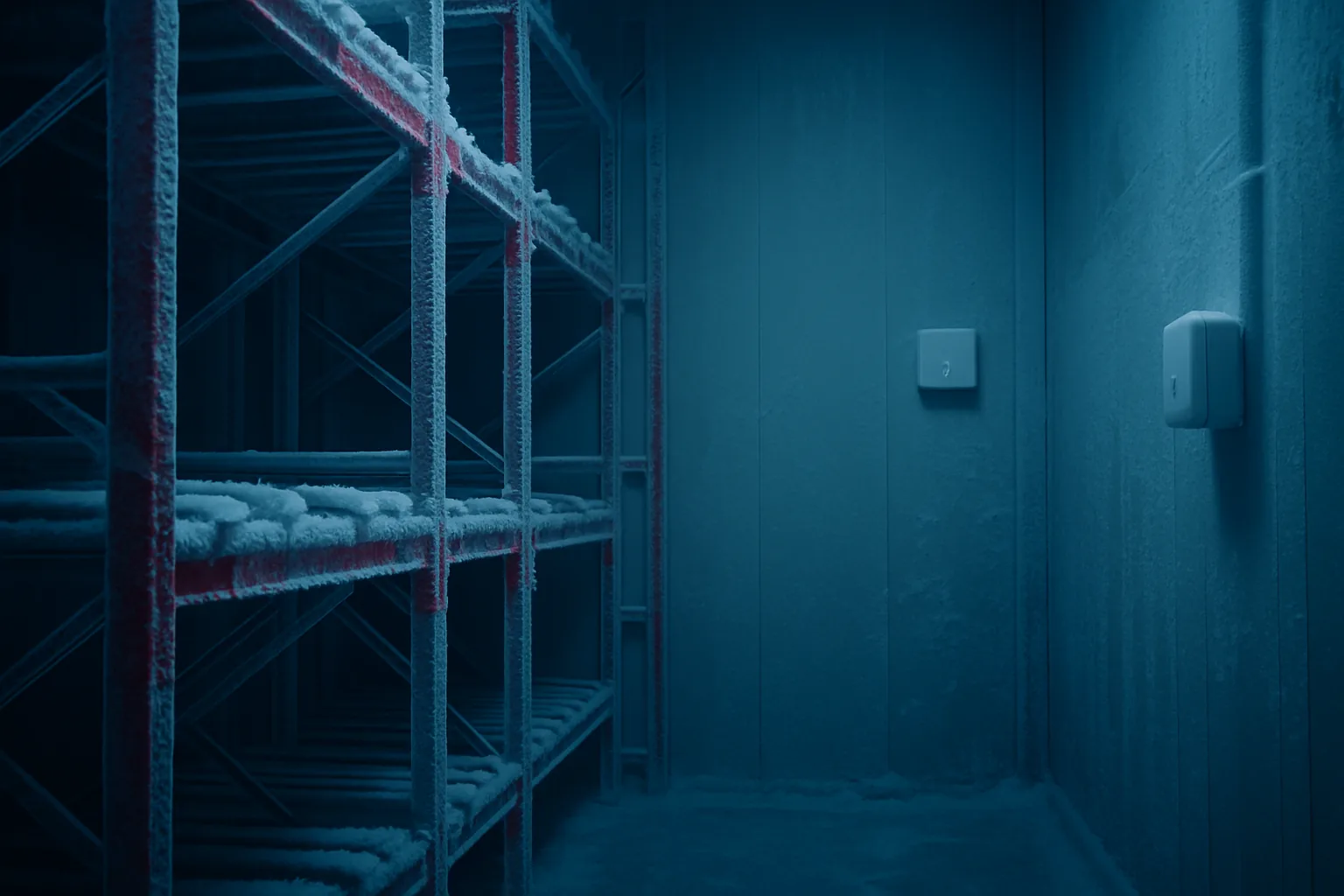
A lot of warehouse data is still late.
Not because the business does not care about visibility. Not because the software teams are not trying. The delay often comes from the way the operation is stitched together.
One system logs temperature. Another records inventory movement. Another handles shipping. Another keeps compliance records. Another receives batch updates at the end of a shift or after a scheduled transfer.
That may be acceptable for back-office reporting. It is not enough for live operations.
For cold chain, regulated goods, GDP/GMP environments, and high-accountability logistics, delayed data creates real problems. It leads to manual screenshots, spreadsheet notes, handwritten exceptions, and long searches when someone asks what happened.
The question is not only whether the data exists.
The question is whether the operator can see it when it matters.
Batch data creates blind spots
Batch transfers are a compromise. They move data from one system to another on a schedule instead of as events happen.
That creates a gap between the physical operation and the digital record.
A pallet may have already moved.
A temperature zone may have already drifted.
A door may have been open too long.
A worker may have already corrected an issue manually.
An exception may have happened hours before the system reflects it.
By the time the data arrives, the operation has moved on.
That is where “lost hours” appear. Teams spend time reconciling logs, matching timestamps, confirming who did what, and explaining why the system does not match the floor.
For compliance-heavy environments, those lost hours can become audit pain.
EDI-to-API translation is not just a software problem
Real-time EDI-to-API translation sounds like a middleware topic. In some ways, it is. But in a warehouse, the real challenge begins before the data reaches the middleware.
Where did the data originate?
Was the sensor online?
Was the handheld connected?
Was the device managed?
Was the event captured at the edge?
Was the network reliable in that part of the facility?
If the physical layer is unreliable, the data pipeline starts with gaps.
ECHO’s position is simple: real-time visibility requires owned infrastructure from the floor up.
That means the private wireless network, managed devices, IIoT sensors, and warehouse applications are treated as one solution instead of separate point products.
Compliance-grade visibility starts with continuous telemetry
Cold-chain and environmental monitoring are good examples.
A temperature reading is useful. A continuous temperature history is better. A temperature reading tied to a zone, pallet movement, worker action, and timestamped event trail is more valuable still.
That is the difference between a disconnected sensor and a live operational model.
ECHO layers environmental IIoT sensors directly onto a private wireless foundation. The goal is not just to collect readings. The goal is to turn raw physical telemetry into operational context.
Which area is affected?
What inventory was nearby?
Who was working in the zone?
How long did the condition last?
Was there a response?
Did the event create a compliance concern?
Those answers matter more than another isolated dashboard.
Owned infrastructure gives operators control
When compliance data depends on networks, devices, and systems the operator does not control, traceability becomes fragile.
ECHO’s architecture gives the operation a dedicated private wireless foundation, segmented from corporate IT and designed around the facility. That allows the operator to treat operational telemetry as a first-class system instead of background traffic competing with office devices.
The benefit is not just technical cleanliness.
It is operational confidence.
The network is designed for the warehouse.
The devices are managed for the use case.
The sensors are deployed where the data is needed.
The applications are built around the workflow.
The resulting model reflects what is happening live.
The operator takeaway
Real-time compliance is not created by a dashboard alone.
It is created when the physical operation, the network, the devices, the sensors, and the applications are connected as one system.
Batch data will always have a place. But when the floor is moving, temperature is changing, and traceability matters, operators need live truth.
ECHO for Logistics is built around that live truth: owned private infrastructure, continuous telemetry, managed devices, and one operational view.
Because when an audit question comes, the answer should not be buried in a batch file.
It should already be part of the live record.